






Integrated Power Solutions for Commercial Solar and Backup Power
Integrated Power Solutions for Commercial Solar and Backup Power
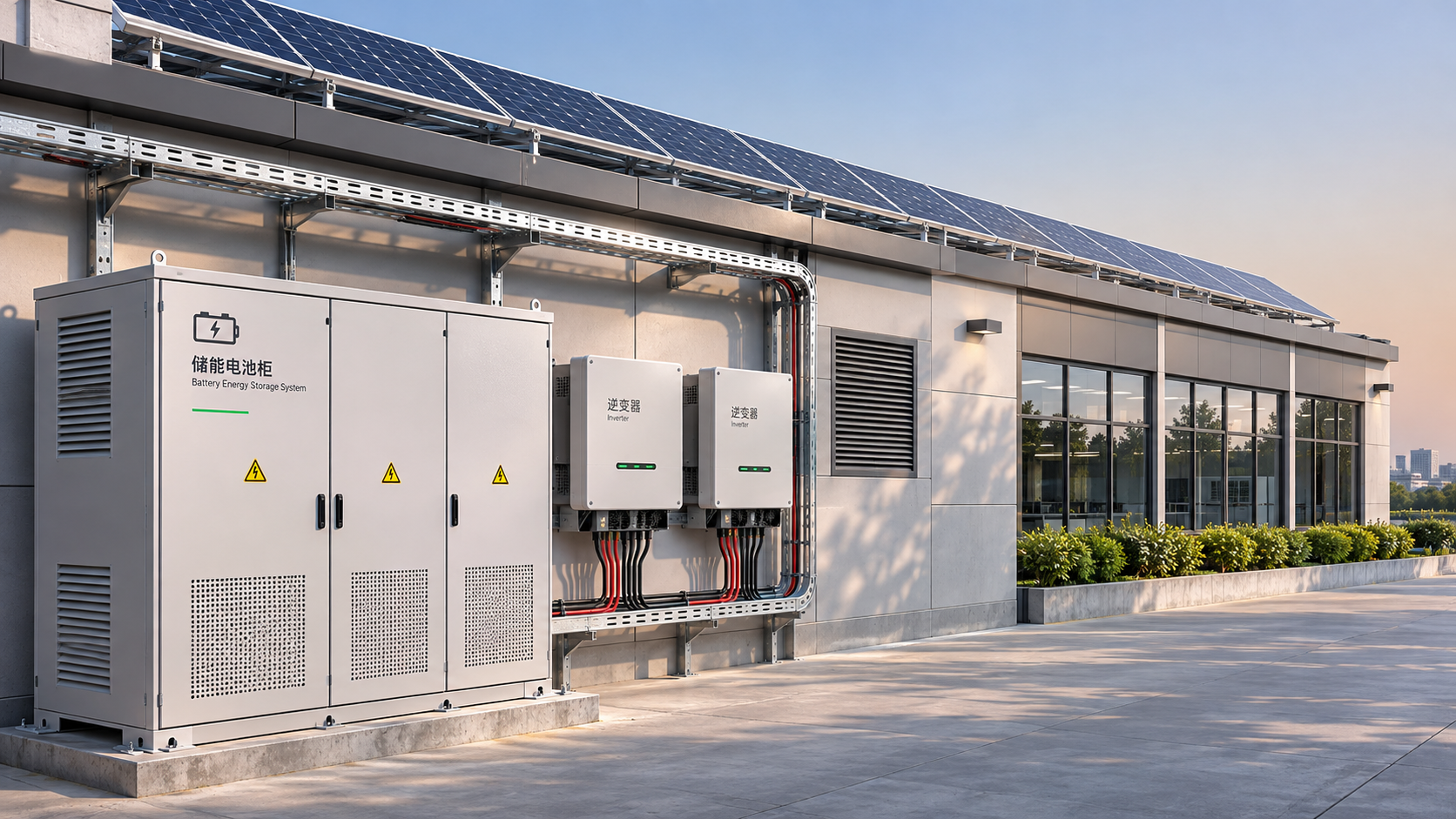
Commercial solar and backup power projects demand more than reliable equipment. They require coordinated systems that support performance, safety, and long-term operational goals. Integrated power solutions bring solar generation, energy storage, and backup power together, helping project teams address site-specific requirements without treating each component as an isolated purchase.
The difficult decisions usually arise at the interfaces: which loads must remain energized during an outage, how the battery and generator share responsibility, whether the controls can operate the equipment as intended, and which approvals apply to the assembled system. Resolving these questions early can prevent expensive redesign when construction is already underway.
Start with the operating problem, not the equipment list
A commercial facility may want to reduce grid purchases, manage peak demand, maintain operations during outages, or achieve a combination of all three. Those objectives overlap, but they do not necessarily lead to the same design. A battery sized mainly for daily energy shifting may have insufficient reserve when an outage occurs. A system designed around several hours of backup may leave less capacity available for routine tariff management.
Begin with interval electricity consumption data where available, utility bills, the facility’s operating schedule, and an inventory of major loads. Review how demand changes by season and shift, not just the annual consumption total. Solar production depends on the available installation area, shading, orientation, and local conditions; the best use of that production depends on when the facility actually consumes electricity.
For backup planning, separate loads into groups. Safety systems and essential process controls may need immediate support, while comfort cooling or nonessential charging can often be deferred. Some facilities may also need a controlled shutdown rather than uninterrupted full production. That distinction affects inverter capacity, transfer arrangements, battery size, and cost.
Size for both power and usable energy
Battery capacity is commonly discussed in kilowatt-hours, but capacity alone does not establish whether a system can support a facility. The inverter must also deliver the required power in kilowatts, including appropriate allowance for motor starting, temporary surges, and simultaneous loads. A battery with adequate stored energy can still fail to support the intended operation if the power conversion system is undersized.
A useful starting calculation is the expected critical load multiplied by the desired backup duration. Treat that result as a preliminary energy requirement, not a final battery specification. The design must also account for conversion losses, permissible battery operating range, reserve settings, temperature, and expected capacity change over the project life. Where loads vary significantly, use a time-based load profile rather than assuming one constant value.
Ask how the system will behave when an outage begins with a partially discharged battery. If daily savings rely on using most of the available energy, backup capability may be limited at precisely the wrong time. A minimum state-of-charge reserve, an outage forecast strategy, or a generator may address this trade-off, but each changes the economics and control requirements.
Solar can extend battery-supported operation during an outage, but only if the system is designed and permitted to operate in island mode and conditions allow generation. Do not assume that rooftop solar will continue supplying the building whenever the grid is down. The inverter, controls, protection equipment, and load conditions must support that operating mode.
Decide how the system will operate when the grid fails
A grid-connected solar installation, a battery energy storage system, and a standby generator can all be present at one site without functioning as a coordinated backup solution. The project needs a defined sequence of operations: how grid loss is detected, how the facility is isolated from the utility, which equipment forms the islanded electrical network, and how loads are restored.
Transfer time matters. Some equipment can tolerate a brief interruption; sensitive controls or communications equipment may require an appropriately designed uninterruptible power supply. Specify the acceptable interruption at the load, rather than assuming that a general “backup power” requirement covers it.
If a generator is included, confirm how it starts, connects, shares load, and charges the battery where that function is intended. The controls should also define what happens if solar output changes quickly, battery charge reaches its limit, or demand exceeds the available generation. These are not edge cases to leave until commissioning: they determine protection settings, generator sizing, and communication requirements.
Return to normal operation deserves the same attention. Reconnection may require synchronization, utility-approved settings, and a controlled transition of loads. The correct sequence depends on the selected equipment and local interconnection requirements.
Check compatibility beyond nameplate ratings
Equipment can appear compatible on paper yet cause problems once connected. Alongside voltage, current, frequency, and power ratings, examine battery-to-inverter communication, approved operating ranges, firmware compatibility, protection coordination, and environmental limits. Identify who supplies each interface and who is responsible for making it work.
The choice between AC-coupled and DC-coupled architectures is one example. AC coupling can be useful when integrating storage with an existing solar installation, although the existing inverter’s behavior during islanded operation must be verified. DC coupling may offer a different path for coordinating solar and storage, but suitability depends on the selected conversion equipment, site layout, and operating objectives. Neither arrangement is automatically preferable for every project.
Request an equipment compatibility matrix and a single-line diagram before final procurement. They should show the major electrical connections, isolation points, protective devices, metering locations, and communication links. Also establish a clear boundary between the energy management system, building management system, utility controls, and any generator controller. If two systems can issue conflicting commands, the project needs a defined priority.
Treat compliance as a system-level workstream
Certification documents are useful only when they apply to the equipment and configuration being installed. A battery cell, battery module, inverter, and complete energy storage system may be evaluated under different standards. A test report is not necessarily a product listing, and a component certification does not automatically establish approval for the assembled installation.
For North American projects, the applicable documentation may include UL 1741 and UL 1741 SB-related inverter requirements, IEEE 1547.1-2020 testing, UL 1973 battery requirements, or UL 9540 system requirements. UL 9540A addresses a test method for evaluating thermal runaway fire propagation; its results should be reviewed in the context of the actual installation and the authority having jurisdiction. Applicability depends on the equipment, edition of the standard, local rules, and project design.
European projects require their own review of applicable requirements and conformity documentation. A CE marking should not be treated as interchangeable with a North American listing. In either market, confirm the exact model numbers, certificate status, permitted configurations, and installation instructions with the supplier and relevant authorities.
Solan New Energy Technology Co., Ltd. reports certifications and testing across a range of relevant standards, including UL 1741, UL 1973, UL 9540, UL 9540A, IEC 62619, and CE. For a specific project, the practical next step is to request the documentation for the proposed models and verify its scope, rather than relying on a general company-level list.
Plan the installation around access, safety, and ownership
A technically sound design can become difficult to deliver if the chosen location does not accommodate equipment clearances, cable routes, lifting access, drainage, ventilation, or maintenance. Review the battery and inverter installation instructions against the actual site layout. Fire protection, separation distances, emergency access, and permitting should be discussed with the relevant authority and the project’s safety specialists before the layout is frozen.
Environmental exposure also affects the design. Temperature, humidity, dust, corrosion, and the distinction between indoor and outdoor installation can influence equipment selection and auxiliary loads. Where cooling or heating is needed, include its electrical consumption and failure response in the operating plan.
Responsibility for interfaces should be explicit in the scope of work. The solar contractor may supply generation equipment, an electrical contractor may install switchgear, and another supplier may provide storage controls. Someone must still own the integrated design, protection settings, communications testing, and resolution of defects across those boundaries.
Commission the operating scenarios, not just the components
A successful startup demonstrates more than a charged battery and a functioning solar inverter. The commissioning plan should test the agreed operating sequences under safe, controlled conditions, with the participation and approvals required for the site. Depending on the design, this may include simulated grid loss, transfer to backup, generator start, load shedding, alarm reporting, and restoration of normal operation.
Record the settings and results, including any limitations that could not be tested. Confirm that site personnel can identify alarms, isolate equipment where authorized, and reach the appropriate service provider. Remote monitoring is useful, but it does not replace a response plan for communications loss or a serious fault.
The handover package should include as-built drawings, equipment manuals, protection and control settings, warranty terms, maintenance schedules, software access arrangements, and a list of spare parts or service dependencies. Clarify which performance measures will be monitored and who can change reserve settings or operating schedules after handover.
Evaluate lifetime performance, not just initial price
An integrated solar and backup system may operate for years under changing tariffs, facility schedules, and reliability requirements. Compare proposals using a consistent set of assumptions: usable battery energy, power rating, expected operating pattern, auxiliary consumption, maintenance responsibilities, and replacement provisions. Pay particular attention to warranty conditions and the operating behavior needed to maintain coverage.
Supply-chain and engineering support also affect long-term risk. Solan describes relationships with battery industry companies including EVE, BYD, and CATL, alongside its PCBA and electronics research and development center and testing laboratories. For an individual project, ask which components are proposed, how substitutions would be managed, and what technical support is available during integration and service.
Before selecting a solution, assemble a concise project brief: load profiles, critical circuits, required backup duration, acceptable transfer interruption, existing generation, site constraints, target operating modes, and the applicable approval path. With those inputs, suppliers can offer designs that are comparable on the questions that matter—not just on battery capacity or equipment price.
- ▶ Home Energy Storage Battery Costs: What to Include Beyond the Purchase Price
- ▶ Why Does a Home Energy Storage Battery Drain Faster Than Expected?
- ▶ Residential Power Solutions: Solar Battery Backup vs. Standby Generators
- ▶ Which Safety Standards Apply to LiFePO4 Energy Storage Batteries?
- ▶ LiFePO4 Energy Storage Battery Specs: Cycle Life, Depth of Discharge and C-Rate
GET A FREE QUOTE
Please leave your requirements and contact details. Our team will respond promptly with a professional solution and quotation.